Links
Important Dates
Last date for full Submission Deadline:
September 30, 2026
Last date for full Notification of Acceptance:
October 10, 2026
Last date for full Camera Ready Submission:
October 20, 2026
Contact Us
Conference Secretary
cavi@acamail.org
Keynote Speakers
-

Dmitry A. Zaitsev
Professor, University of Derby, Germany.
Research field: Computer Science; Infinite Petri nets; Sleptsov nets; Networking; Exascale Computing.
Dmitry A. Zaitsev received the Eng. degree in Applied Mathematics from Donetsk Polytechnic Institute, Donetsk, Ukraine, in 1986, the Ph.D. degree in Automated Control from the Kiev Institute of Cybernetics, Kiev, Ukraine, in 1991, and the Dr.Sc. degree in Telecommunications from the Odessa National Academy of Telecommunications, Odessa, Ukraine, in 2006. He is a Professor of Information Technology at Odessa State Environmental University, Ukraine since 2019 and also Senior Research Affiliate at Fundación Centro de Supercomputación de Castilla y León, Spain. He developed the analysis of infinite Petri nets with regular structure, the decomposition of Petri nets in clans, generalized neighborhood for cellular automata, and the method of synthesis of fuzzy logic function given by tables. He developed Opera-Topaz software for manufacture operative planning and control; a new stack of networking protocols E6 and its implementation within Linux kernel; Petri net analysis software Deborah, Adrian, and ParAd; models of TCP, BGP, IOTP protocols, Ethernet, IP, MPLS, PBB and Bluetooth networks. He is the ACM Senior Member, IEEE Senior Member, and the Member of ACM Europe Technology Policy Committee, Autonomous Systems.
-
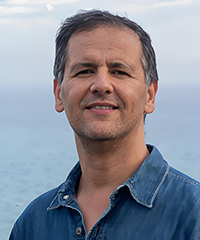
Hocine Imine
Senior Researcher, Gustave Eiffel University, France.
Research field: Automotive Engineering; Automotive Systems Engineering; Mechanical Engineering; Intelligent Transportation Systems; Simulators and Vehicles Modeling and Stability.
Dr. Hocine Imine, received his PhD in Robotics and Automation from the Versailles University, France, in 2003 and the Accreditation to Supervise Research (Habilitation à Diriger des Recherches - HDR) on March 2012 from Valenciennes University. In 2005, he joined IFSTTAR (French institute of science and technology for transport, development and networks), and Gustave Eiffel University in 2021, where he is currently a Research Director. He is Member of IFAC Technical Committee on Transportation systems (TC 7.4) and editorial board member for many international academic journals. He is Cohead of NEXTRIM Associated International Laboratory, created in 2021 with University of Bologna, Italy. His research interests include Intelligent Transportation Systems, Simulators and Vehicles modeling and stability, nonlinear observation, and nonlinear control. He published many books and papers.
-
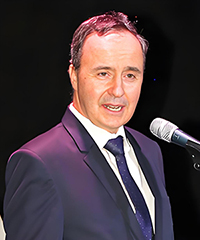
Radu-Emil Precup
Professor, Politehnica University of Timisoara, Romania.
Research field: Optimization Techniques; Control Structures and Algorithms; Intelligent Control.
From 1987 to 1991, Radu-Emil Precup was with Infoservice S.A., Timisoara. He is currently with the Politehnica University of Timisoara, Romania, where he became a Professor in the Department of Automation and Applied Informatics, in 2000, and he is currently a Doctoral Supervisor of automation and systems engineering. From 2022, he is also a senior researcher and the head of the Data Science and Engineering Laboratory of the Center for Fundamental and Advanced Technical Research, Romanian Academy – Timisoara Branch, Romania. From 2016 to 2022, he was an Adjunct Professor within the School of Engineering, Edith Cowan University, Joondalup, WA, Australia. He is currently the Director of the Automatic Systems Engineering Research Centre with the Politehnica University of Timisoara, Romania. From 1999 to 2009, he held research and teaching positions with the Université de Savoie, Chambéry and Annecy, France, Budapest Tech Polytechnical Institution, Budapest, Hungary, Vienna University of Technology, Vienna, Austria, and Budapest University of Technology and Economics, Budapest, Hungary. He has been an Associate Editor of IEEE Transactions on Fuzzy Systems, Information Sciences, Engineering Applications of Artificial Intelligence, Applied Soft Computing, Expert Systems with Applications, Applied Artificial Intelligence, and Healthcare Analytics, is the Editor-in-Chief of Romanian Journal of Information Science and Technology, and is an editorial board member of several prestigious journals. Prof. Precup is a corresponding member of the Romanian Academy. He received the Elsevier Scopus Award for Excellence in Global Contribution (2017), was named a 2022 academic data leader by Chief Data Officer (CDO) Magazine, and was listed as one of the top 10 researchers in artificial intelligence and automation. He is IEEE Senior Member and Technical Committee Member on Virtual Systems in Measurements of the IEEE Instrumentation and Measurement Society.
-

Ankit R. Patel
Senior Associate Professor, Woxsen University, India.
Research field: Users and Society, Customer Experience, User-Centered Design, Sustainable Transportation, Human Factors and Interaction, Socially Inclusive Transportation.
Ankit R. Patel is serving as Senior Associate Professor in the School of Arts and Design at Woxsen University, Hyderabad, India. He has more than 15 years of experience including academic and industry clusters. He also serves as an Academic Advisor and Industry Advisor to many organizations. He has been involved as a keynote speaker in more than 35 international venues, including India, Italy, Germany, the USA, Morocco, the Czech Republic, South Africa, China, the UAE, Nigeria, and Qatar. He has associated with various prestigious international conferences like ACM (CHI, AfriCHI, CHIWORK, NordiCHI, OzCHI, AutomotiveUI, Mindtrek, COMPASS, GROUP, IMX, MuC), IEEE (ITEC, AFRICON, e-Science, MELECON, LOGISTIQUA, WF-PST, ECCE, GTSNZ, SeFeT), HFES ASPIRE, Design Research Society (LXD), Participatory Design Conference (PDC), and IFAC (CTS). At the ASME/IEEE 2026 INNOVA Rail Conference (erstwhile JRC), he will serve as the paper chair. He is serving as an Editor-in-Chief for the EAI Endorsed Transactions on Human-Computer Interaction. He also serves as a lead editor for the special issue in the Journal on Multimodal User Interfaces (User- Centered Advanced Driver Assistance Systems) and in Future Transportation(Sustainable Transportation and Quality of Life)and as an editorial board member in the International Journal of Innovative Research and Scientific Studies: Journal of Social Economic Research; Journal of Sustainable Urban Mobility; Transportation Development Research; Edelweiss Applied Science and Technology, and Design+. His research interests lie in the fields of automotive human factors and interaction, smart cities, policy and design, sustainable and socially inclusive transportation.
-
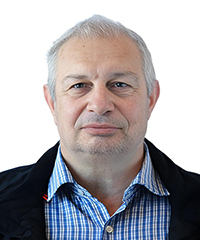
Dimitrios A. Karras
Associate Professor, University of Athens (NKUA), Greece.
Research field: Intelligent & Distributed Systems; Multiagent Systems; Pattern Recognition and Computational Intelligence; Image & Signal Processing/Systems; Communications and Networking.
Assoc. Prof. Dr. Dimitrios A. Karras received his Diploma and M.Sc. Degree in Electrical and Electronic Engineering from the National Technical University of Athens (NTUA), Greece in 1985 and the Ph.D in Electrical Engineering, NTUA, Greece in 1995, with honors. During 1990-2004 he collaborated as visiting professor and researcher with several universities and research institutes in Greece and Heidelberg, Germany (DKFZ). During 2004-2018 he has been with the Sterea Hellas Institute of Technology, Automation Dept., Greece as assoc. prof. in Digital Systems and Signal Processing, as well as visiting prof. of Hellenic Open University, Dept. Informatics in Communication Systems (2002-2010). Since 1/2019 is Associate Prof. in Digital and Intelligent Systems & Signal Processing, in National & Kapodistrian University of Athens, Greece, School of Science, Dept. General as well as adjunct Assoc. Prof. Dr. with the School of Basic Sciences, BIHER University, Chennai, India, as well as with the GLA university, Mathura, India and EPOKA & CIT universities, Computer Engineering Dept., Tirana. He has published more than 80 research refereed journal papers in intelligent and distributed/multiagent systems, pattern recognition, image/signal processing and neural networks as well as in bioinformatics and more than 185 research papers in International refereed scientific Conferences. He has served as program committee member as well as program/general chair at several international workshops and conferences in signal, image, communication and automation systems. He has been cited in more than 2500 research papers, and his H/G-indices are 21/51 (Google Scholar) and his Erdos number is 5. His RG score is 31.94, in the highest 10% of scientific researchers.
-

Md Abdus Samad Kamal
Associate Professor, Gunma University, Japan.
Research field: Model Predictive Control; Reinforcement Learning; Machine Learning; Artificial Intelligence; Cyber-Physical Systems; IoT; Multi-Agent Systems; Swarm Robotics.
Md Abdus Samad Kamal received the B.Sc. Engineering degree from Khulna University of Engineering and Technology (KUET), Bangladesh, in 1997 and the Master and Ph.D. degrees from Kyushu University, Japan, in 2003 and 2006, respectively. He was a Lecturer with KUET from 1997 to 2000, a Researcher with Kyushu University in 2006, and 2008 to 2011, an Assistant Professor with International Islamic University Malaysia, Malaysia from 2006 to 2008, a Researcher with The University of Tokyo, Japan from 2011 to 2014. He worked as a Visiting Researcher with Toyota Central R \& D Labs., Inc., Japan, from 2014 to 2016. He was a Senior Lecturer in the School of Engineering, Monash University Malaysia from 2016 to 2019. Currently, he is an Associate Professor in the Graduate School of Science and Technology, Gunma University, Japan. His research interests include intelligent transportation systems, connected and automated vehicles, and the applications of machine learning and model predictive control. Dr. Kamal is a member of the Society of Instrument and Control Engineers (SICE), a Senior Member of Institute of Electrical and Electronics Engineers (IEEE), and a Chartered Engineer of Institution of Engineering and Technology (IET).
-

Maki Habib
Professor, The American University in Cairo, Egypt.
Research field: Intelligent and Autonomous Robotics, Autonomous Vehicles; Machine Learning; Nonlinear and Intelligent Control; Human Adaptive and Friendly Mechatronics; Distributed Teleoperation and Collaborative Control; Wireless Sensor Networks; Industrial Robots and Automation.
Maki Habib obtained his Doctor of Engineering Sciences (DES) in Intelligent and Autonomous Robotics from the University of Tsukuba in 1990, Japan. He was a selected research scientist at RIKEN, Japan, and senior researcher at RISO-Laboratories, Japan, and visiting researcher at EPFL, Switzerland. He was a visiting expert under Asian Development Bank (ADB), Associate Professor at UTM, Malaysia, and a Senior Manager at MCRIA for engineering projects and industrial consultation, Malaysia. He was a leading senior research scientist with GMD-Japan, Japan leading Telecooperation research group. Associate Professor with Monash University (Australia/Malaysia), he developed and led the Mechatronics Engineering program. He was appointed as a full Professor of Robotics and Mechatronics at Swinburne University (Australia/Malaysia). Then, he was an invited Professor at KAIST, South Korea, Residing Professor at Saga University, Japan, and since Sept. 2007 he is a full Professor of Robotics and Mechatronics at AUC. Habib was a visiting professor (short term) at many Universities around the world, such as, Nagasaki University-Japan, Hokkoido University-Japan, Orebro University – Sweden, Norwegian University of Science and Technology – Norway, etc. Habib served as a consultant and Technical advisor to well-known international companies including Toyota group and ABB. Habib is Editor-in-Chief of the International Journal of Artificial Intelligence and Machine Learning, Regional Editor and Associate Editor of 10 International Journals, and Editorial Board member of another 10 International Journals beside his leadership as a member of international organizing/program committee of more than 20 International Conference every year. Habib edited more than 14 books, published more than 26 book chapters and also more than 275 papers at international journals and international conferences.
-
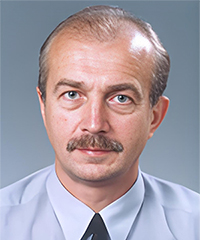
Vladimir G. Chigrinov
Professor, Hong Kong University of Science and Technology, China.
Research field: Electro-optic Effect; Computer Modeling; Optical Alignment Technology; Optical Fiber; Liquid Crystal Devices.
Professor Vladimir G. Chigrinov is Professor of Hong Kong University of Science and Technology since 1999. He is recognized by the World Technology Evaluation Centre, 1994, and SID Fellow since 2008. He is an author of 6 books, 31 reviews and book chapters, about 333 journal papers, more than 718 Conference presentations, and 121 patents. He got Excellent Research Award from HKUST School of Engineering in 2012. He obtained Gold Medal and The Best Award in the Invention & Innovation Awards 2014 held at the Malaysia Technology Expo (MTE) 2014, which was hosted in Kuala Lumpur, Malaysia, on 20-22 Feb 2014. He is a Member of EU Academy of Sciences (EUAS) since July 2017. He got a Slottow Owaki Prize of SID in 2018. He is 2019 Distinguished Fellow of IETI (International Engineering and Technology Institute). Since 2018 until 2020 he works as Professor in the School of Physics and Optoelectronics Engineering in Foshan University, Foshan, China. 2020-2024 Vice President of Fellow of Institute of Data Science and Artificial Intelligence (IDSAI) Since 2021 distinguished Fellow of Institute of Data Science and Artificial Intelligence. He has been IETI Fellow since 2019. Since March 2022 he has been a Fellow of National Academy of Technology for his contributions to Information Electrical and Electronic Research.
-
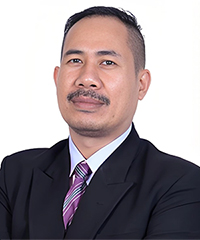
Azlan Mohd Zain
Professor, Universiti Teknologi Malaysia, Malaysia.
Research field: Artificial Intelligence; Modeling and Optimization; Statistical Process Control of Machining.
Azlan Mohd Zain received the Ph.D. degree in computer science from Universiti Teknologi Malaysia in 2010. He is currently a professor of computer science with the Big Data Center, Universiti Teknologi Malaysia. His main research interests include artificial intelligence, modeling and optimization, machining, and statistical process control. Azlan Mohd Zain has published over 200 papers in numerous international academic journals, participated in dozens of international academic conferences, and served as conference chair and speaker on multiple occasions. He also serves on the editorial boards and as a guest editor for several international academic journals. He is an IEEE Member and has a Google Scholar h-index of 48.